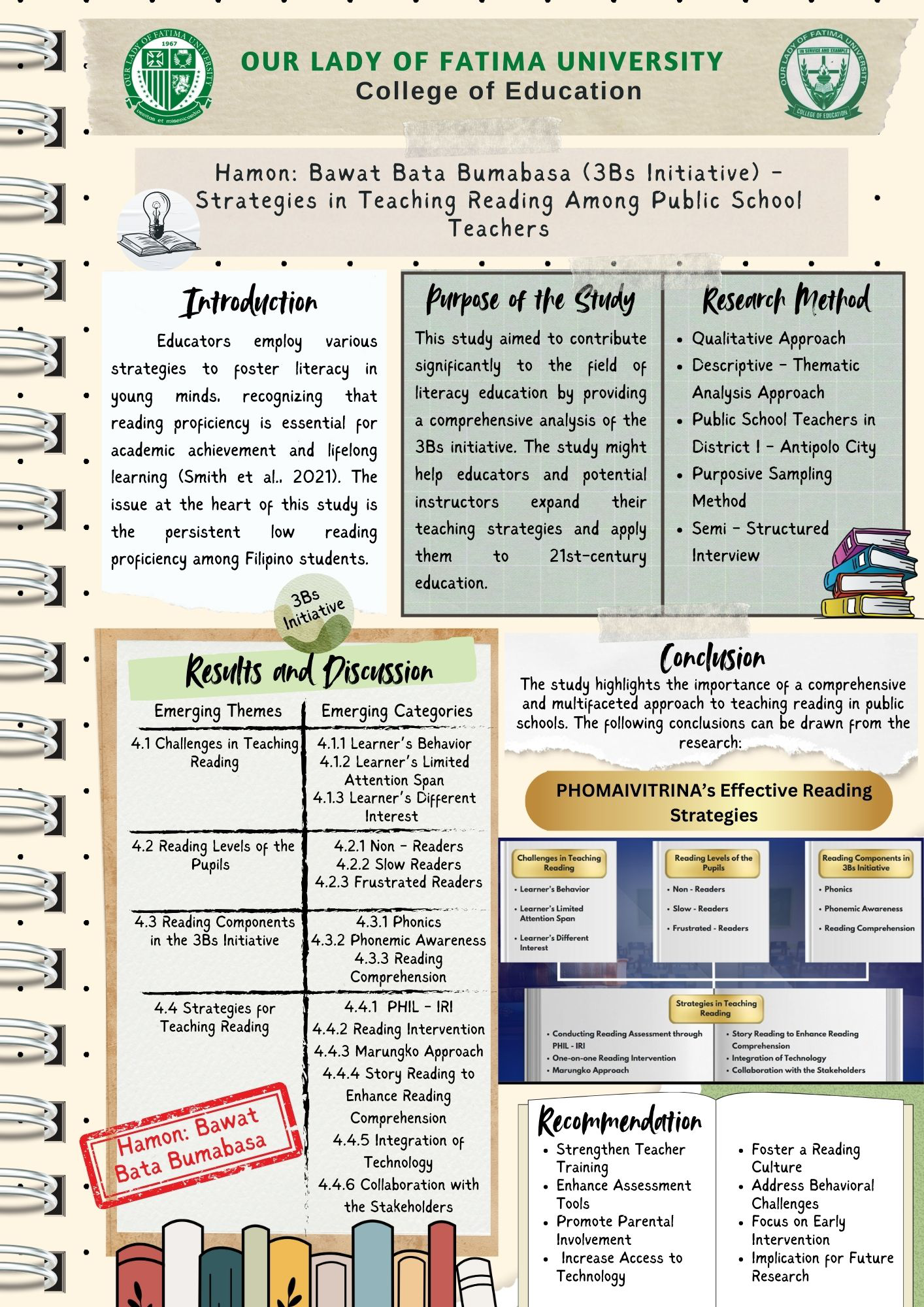
Hamon: Bawat Bata Bumabasa (3Bs Initiative) – Stra
Qualitative
Year: 2024
Authors: Phoebe N. Cequeña, Via Bianca G. Blanca, Patrici
Abstract
Proficient reading is a fundamental requirement for academic success and lifelong learning. As such, educators continuously refine teaching approaches... Proficient reading is a fundamental requirement for academic success and lifelong learning. As such, educators continuously refine teaching approaches to effectively develop this essential skill. In response to the Philippines’ low performance in the Programme for International Student Assessment (PISA), the Department of Education (DepEd) implemented a national reading intervention through Memorandum No. 173, series of 2019, known as Hamon: “Bawat Bata Bumabasa” (3Bs). This initiative aims to ensure that every learner attains functional reading proficiency. The program is further reinforced by the amended MATATAG Curriculum, which introduced Catch-Up Fridays, dedicating one day each week to focused reading remediation and enrichment throughout the school year. Collectively, these efforts seek to address learners’ reading difficulties, foster positive reading habits, and enhance literacy skills alongside values and health education.
Effective reading instruction must integrate the core components of literacy, including phonemic awareness, phonics, and reading comprehension. Teaching strategies under the program include administering the Philippine Informal Reading Inventory (Phil-IRI) to determine learners’ reading levels, providing one-on-one reading interventions, implementing peer tutoring, and integrating technology such as audiovisual materials and educational software. Collaboration with parents and community stakeholders is also emphasized to ensure sustained support for learners’ reading development.
Future research is recommended to examine the long-term impact of the 3Bs Initiative on learners’ reading proficiency and overall academic achievement. Further studies may also explore the effectiveness of specific technological tools and parental involvement strategies in strengthening reading outcomes.Show More ▼